


Hanoi–Hai Phong Expressway: 10 Years of Pioneering Development and Setting a Benchmark


Tien Phong Newspaper – After 10 years in operation, the Hanoi–Hai Phong Expressway has become a symbol of quality, efficiency and innovation in traffic management and operations. It is a landmark expressway in Vietnam, bringing together numerous “firsts” and “only” achievements. From its early beginnings, VIDIFI has, over 18 years, grown into a leading Vietnamese brand in transport infrastructure investment and development.
From the Beginning…
The Hanoi–Hai Phong Expressway is 105 km long, comprising six traffic lanes and two emergency stopping lanes. Construction began in September 2008, and the entire route was opened to traffic in December 2015. The project is a national key project invested in and developed by the Vietnam Infrastructure Development and Finance Investment Corporation (VIDIFI) under the Build–Operate–Transfer (BOT) model.
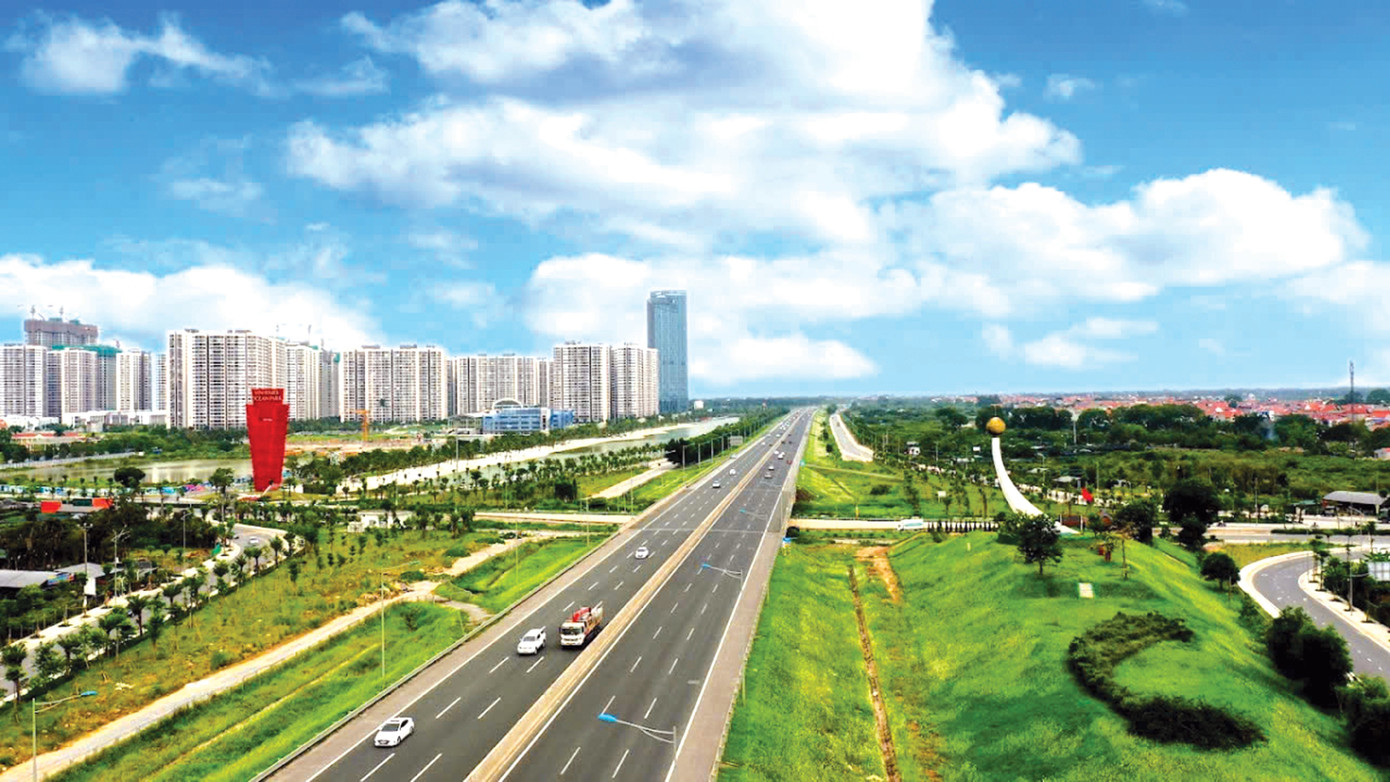
The Hanoi–Hai Phong Expressway has become a benchmark project over the past 10 years.
According to VIDIFI’s leadership, when the project was launched, the BOT framework for transport infrastructure in Vietnam was still relatively new, with an incomplete legal framework. VIDIFI therefore became a “pioneer” in implementing this new model. With the support of the Vietnam Development Bank (VDB), the company built its organizational structure from the ground up, recruited experienced engineers and consulted leading experts in the field.
In addition to legal challenges, the project had to overcome significant technical obstacles. More than 70% of the route passes through weak soil areas, requiring complex foundation treatment solutions. To address this challenge, VIDIFI’s leadership said the company boldly applied Korean soft-foundation treatment technology to hundreds of underpasses, used high-quality polymer-modified asphalt for the pavement, engaged international supervision consultants and referred to certain U.S. standards during construction to ensure the quality of the works.
Thanks to these bold decisions, the Hanoi–Hai Phong Expressway has become a high-quality expressway with a design speed of 120 km/h and synchronized systems of road signs, lighting, guardrails, rest areas and services. In particular, the Intelligent Transport System (ITS), camera-based monitoring and Electronic Toll Collection (ETC) systems have enabled efficient expressway operations while helping reduce congestion and traffic accidents.
The expressway has reduced travel time between Hanoi and Hai Phong to approximately 1–1.5 hours, becoming a strong driver of development for the Northern Key Economic Region. Road users have highly appreciated the convenience, safety and cost savings provided by the Hanoi–Hai Phong Expressway, while management authorities have increasingly regarded it as a successful model for expressway investment and operations in Vietnam.
According to VIDIFI, in addition to maintaining high quality, the expressway has also recorded impressive growth in traffic volume and revenue after more than 10 years of operation. In 2016, the route recorded 6.6 million vehicle trips, or approximately 18,000 vehicles per day. By 2024, this figure had exceeded 21.5 million vehicle trips, or 58,860 vehicles per day—more than three times the 2016 level. In the first nine months of 2025 alone, the expressway served nearly 17 million vehicle trips.
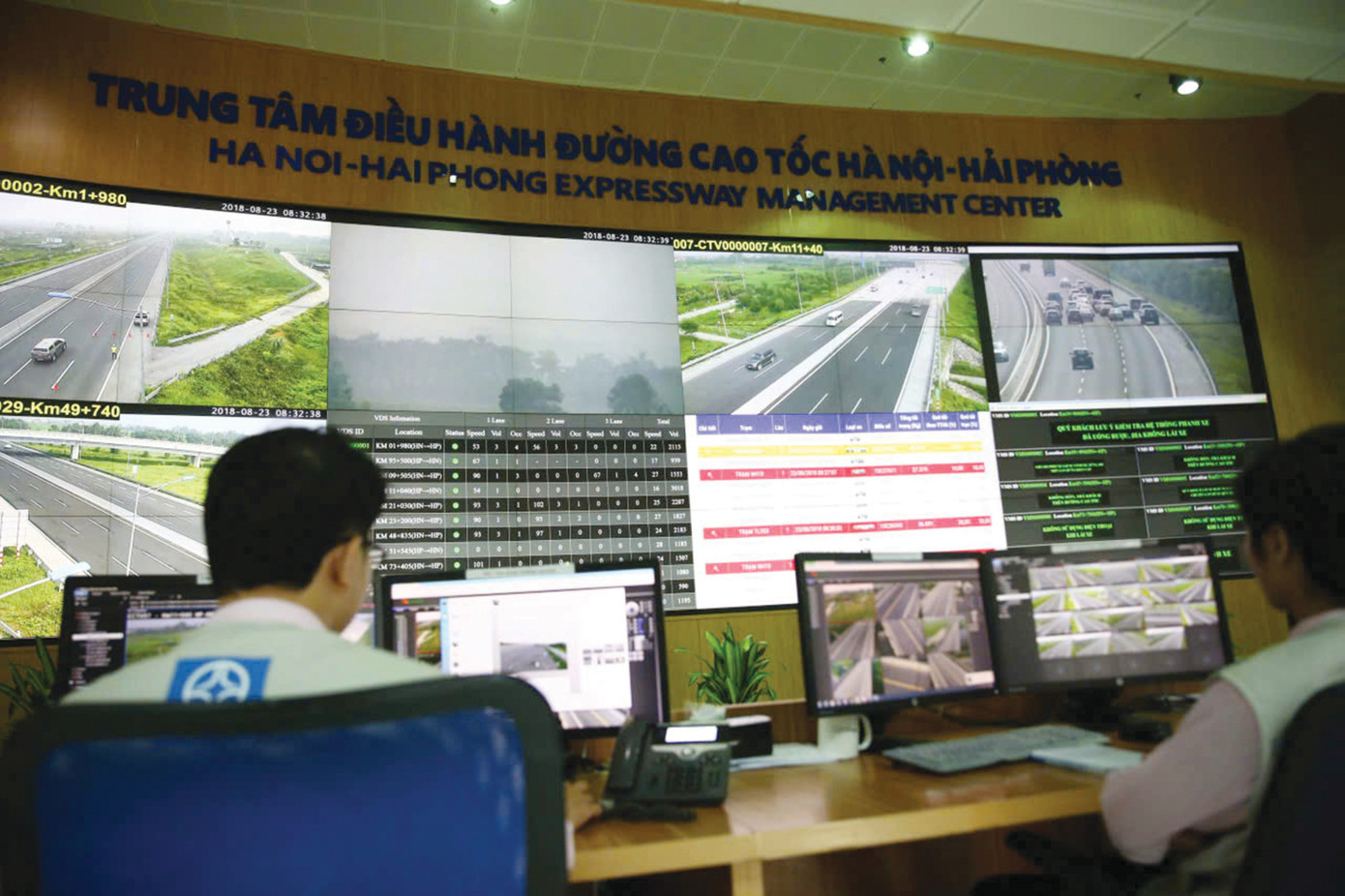
The Intelligent Transport System is being effectively operated and utilized.
Total revenue from the expressway also increased significantly, from nearly VND 865.5 billion in 2016 to nearly VND 2.857 trillion in 2024. In the first nine months of 2025, revenue reached approximately VND 2.231 trillion and was projected to set a new record by year-end. In total, over 10 years, the expressway served approximately 133.4 million vehicle trips and generated more than VND 17.365 trillion in revenue—providing clear evidence of its strategic role as a vital transport artery and the effectiveness of the investment.
…To a Benchmark Expressway
VIDIFI’s leadership emphasized that one of the distinctive features that has led the Hanoi–Hai Phong Expressway to be regarded as a “benchmark expressway” is its pioneering role in implementing new transport policies and technologies.
It was the first expressway in Vietnam to implement ETC consistently across the entire route, helping reduce congestion while enhancing transparency and saving travel time.
The expressway was also the first to apply automated traffic enforcement through an intelligent monitoring system, covering speeding, improper stopping and parking, incorrect lane usage and various other dangerous driving behaviors. From the outset of operations, the expressway also pioneered the installation of 24/7 vehicle weight-control systems at all entrances, using modern Swiss technology without requiring vehicles to stop. Vehicles exceeding the permitted weight are directed to a dedicated lane to exit the expressway. It is the only expressway in Vietnam with a dedicated lane for overloaded vehicles to turn around and leave the expressway. This measure contributes to improving traffic safety, protecting infrastructure and extending the service life of the road.
The expressway’s rest areas and service stations have been developed with modern, clean and well-equipped facilities, providing free services as well as essential amenities for road users, including fuel stations and electric vehicle charging facilities. The V52 Service Station was ranked among the Top 3 Best Tourist Rest Stops in Vietnam in 2019, an award presented at the 2019 ceremony honoring leading tourism businesses and presenting the Vietnam Tourism Awards, organized by the Ministry of Culture, Sports and Tourism.
In addition, road operations and maintenance have received close attention since the expressway was put into service, supported by professional regulations and procedures that comply with applicable standards. Specialized machinery and equipment—including patrol vehicles, road sweeping and washing vehicles, cranes and other equipment—have been comprehensively invested in and deployed, together with a team of qualified and experienced engineers, officers and staff. These efforts have contributed to ensuring traffic safety and improving the quality of the infrastructure. The expressway has also welcomed government agencies and domestic and international organizations to study, visit and exchange experience in expressway operations, management and maintenance.
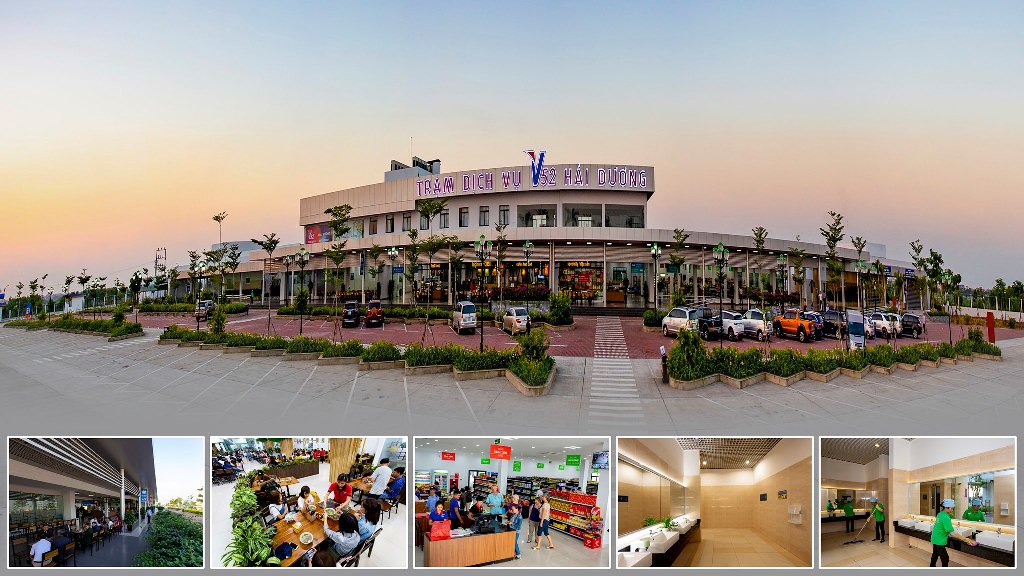
Modern service station on the Hanoi–Hai Phong Expressway.
In particular, from August 15, 2025, the Hanoi–Hai Phong Expressway became the first expressway in Vietnam to pilot a regulation prohibiting trucks from using Lane 1—the lane adjacent to the median—to reduce traffic accidents. This measure is considered necessary and consistent with safety management practices in many countries with modern expressway systems.
From September 19, 2025, the Hanoi–Hai Phong Expressway officially prohibited trucks, passenger vehicles with more than 29 seats, and sleeper buses from using Lane 1. This was considered a basis for the Vietnam Road Administration to study the potential expansion of the measure to other expressways, contributing to improved traffic safety nationwide.
AI to Be Applied in Management and Operations
Regarding its development orientation, VIDIFI’s leadership said that, in addition to managing its own expressway, VIDIFI has developed into a professional operator and maintenance organization with the capacity to participate in other major infrastructure projects. The company has successfully bid for and undertaken the management of nearly 100 km of the North–South Expressway, expanding its business activities in transport infrastructure operations.
The ITS installed during the early days of operation has now revealed certain limitations due to the rapid pace of technological development. VIDIFI is preparing a project for a comprehensive upgrade of the ITS, with a focus on integrating Artificial Intelligence (AI) into management and operations. AI will be applied to monitor traffic volume, vehicle speeds, congestion points and accidents; identify vehicles; detect violations; and issue warnings about adverse weather conditions.
Data will be automatically analyzed and alerts sent to the traffic management center, displayed on electronic message boards along the route, and communicated to road users through applications, websites and SMS. The system will also be programmed with automated response scenarios to minimize manual intervention and increase interaction with road users.
“In the future, when toll barriers are removed, AI will play a key role in automating monitoring, statistics and warnings, helping streamline staffing while maintaining operational efficiency. VIDIFI also plans to apply AI to asset management and infrastructure maintenance, extending the service life of the infrastructure and reducing operating costs,” VIDIFI’s leadership said.
From a pilot BOT project, the expressway has evolved into an infrastructure asset that not only delivers direct socio-economic benefits but also provides a foundation for the development of a professional Vietnamese expressway management and operations workforce. The 10 years of operation of the Hanoi–Hai Phong Expressway are marked not only by impressive figures in traffic volume and revenue, but also by the value of strategic vision, determination to innovate and the cooperation of road users and management authorities.
Source: Tien Phong Newspaper
News in the same category


Featured news